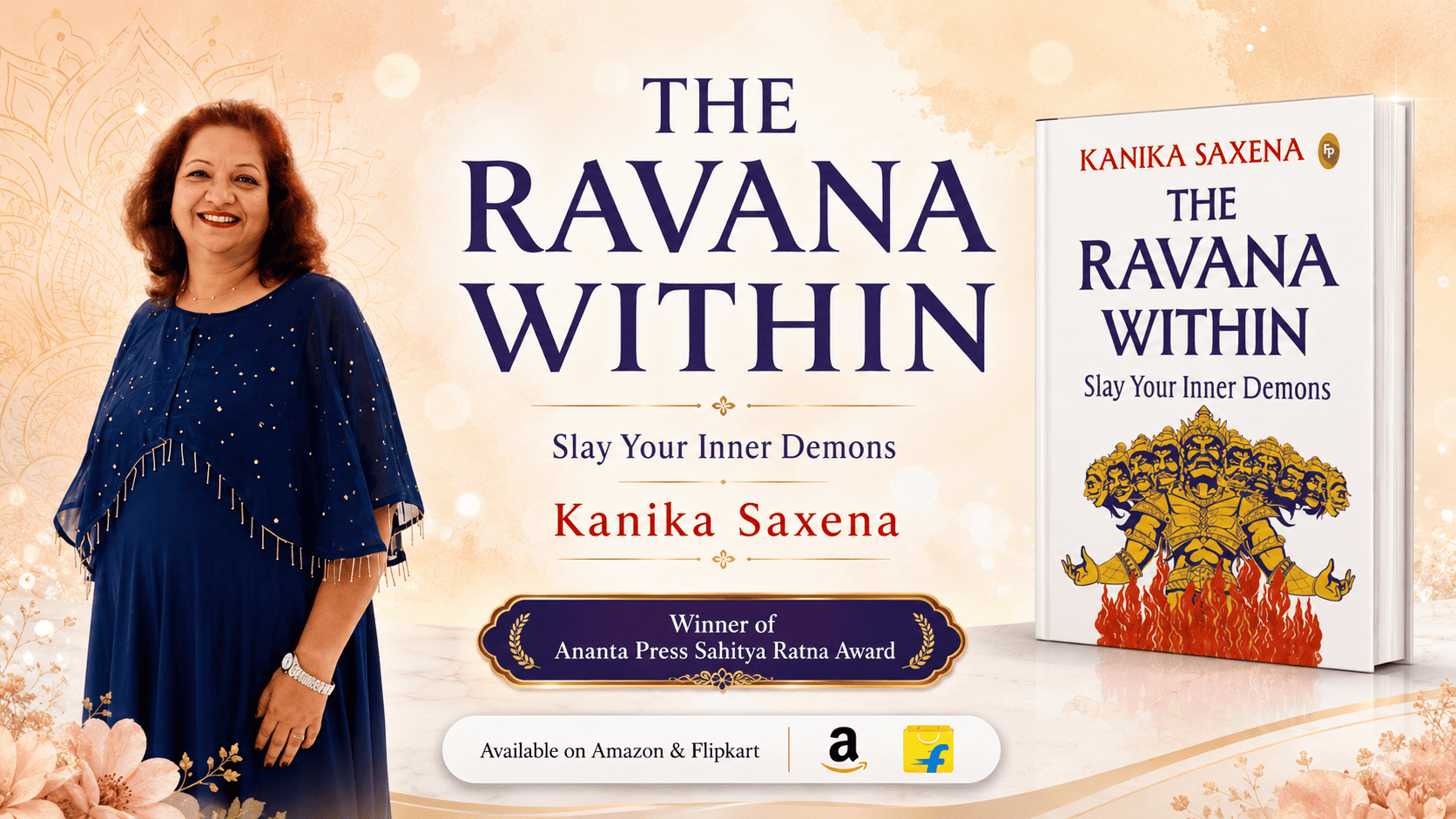
The Ravana Within: Slay Your Inner Demons can be appreciated most fully as a practical invitation to self-examination. Its subject is not an enemy from an ancient story alone, but the repeated patterns through which ordinary people sabotage peace, progress, and relationships. Kanika Saxena uses Ravana as an organising metaphor for a cluster of familiar inner obstacles: ego, anger, greed, jealousy, procrastination, self-doubt, and attachment. This structure is valuable because readers rarely struggle with only one weakness in isolation. Procrastination may arise from self-doubt. Anger may protect a wounded ego. Jealousy may grow from insecurity. Attachment may intensify fear. By presenting these tendencies as related faces of an inner adversary, the book encourages readers to look beneath surface behaviour.
A large part of the self-help market is built around inspiration. Inspiration is useful, but it often fades quickly when a person returns to the same environment, habits, and emotional triggers. The stronger promise of this book lies in its combination of practical insights, relatable examples, and self-reflection exercises. These elements make the reading experience participatory. The reader is not positioned as a passive consumer waiting for the author to provide motivation. Instead, the reader is asked to identify patterns, take responsibility, and practise new responses. That distinction matters. Lasting change usually occurs not when a sentence sounds impressive, but when it becomes connected to a specific behaviour.
Consider ego, one of the book’s central inner demons. Ego is often misunderstood as obvious pride or vanity, but in daily life it can appear in subtle forms: refusing to apologise, becoming defensive when corrected, needing to have the final word, feeling threatened by another person’s success, or avoiding a beginner’s position. A practical book on self-growth must help readers recognise such disguised forms. The Ravana metaphor provides a memorable way to do so. Ravana’s extraordinary knowledge and capability did not save him from the consequences of arrogance. The modern parallel is clear: qualifications, intelligence, status, or talent cannot protect a person who is unwilling to examine the way ego shapes decisions.
Anger is another area in which reflective work is essential. Anger often arrives with a convincing story about why it is justified. Sometimes that story is valid; injustice and disrespect should not be ignored. Yet the expression of anger can still become destructive. A useful self-reflection exercise may ask readers to separate the trigger from the deeper need. Was the anger caused by the present event, or did it activate an older wound? Did the person want respect, reassurance, control, or acknowledgment? Could the same need have been communicated without humiliation or aggression? By inviting this kind of inquiry, the book’s approach can help transform anger from an uncontrollable force into information that can be understood and directed.
The inclusion of procrastination among the inner demons is particularly relevant to contemporary readers. Procrastination is often treated as laziness, but it can be rooted in perfectionism, fear of judgment, uncertainty, low confidence, or the discomfort of beginning. A person may delay writing a proposal, applying for a job, having a difficult conversation, starting a fitness routine, or learning a new skill. Over time, the delay becomes evidence against the self: “I never complete anything.” The book’s broader message of awareness and discipline offers a healthier interpretation. Instead of attacking oneself, the reader can identify the thought that appears before avoidance, reduce the task to a manageable action, and practise consistency. This is practical self-leadership rather than temporary motivation.
Self-doubt deserves similar attention. Many readers will connect with the fear that they are too old, too inexperienced, too late, or insufficiently prepared to begin again. Kanika Saxena’s own life story gives this theme special resonance. After a long period devoted to family, she attempted to restart her career while feeling out of touch with her academic subjects and unfamiliar with computers. Rejections came because of age and limited technical skills, yet she continued, found work in content writing, learned within a younger workplace, became a team leader, and later developed a career as a freelancer, technology writer, life coach, speaker, and author. This journey embodies the principle that self-doubt can be acknowledged without being obeyed.
The exercises described as part of the book can make it suitable for slow reading. A reader may benefit from taking one trait at a time and observing it for several days. For example, a week focused on jealousy could include noting moments of comparison, identifying what quality or achievement is being envied, and converting envy into information about an unexpressed desire. A week focused on attachment could involve distinguishing love from control and preference from dependency. A week focused on greed could examine the difference between healthy aspiration and the belief that “more” will finally create worth. This method turns the book into a personal development companion rather than a one-time reading experience.
Another strength is the emphasis on responsibility for thoughts, choices, and actions. Responsibility can sound severe when it is confused with self-blame. The book’s motivational context suggests a more constructive meaning: responsibility is the point at which change becomes possible. We may not choose every thought that initially appears, but we can question it. We may not control another person’s behaviour, but we can choose boundaries and responses. We may not be responsible for every wound, but we can become responsible for healing rather than repeatedly transferring pain to others. This distinction promotes confidence because it locates power in daily choices.
The book also appears capable of supporting emotional literacy. People frequently say, “I am angry,” when the deeper experience may be shame, fear, disappointment, rejection, or helplessness. They say, “I am lazy,” when they may be overwhelmed. They say, “I am attached,” when they may fear abandonment. Naming the correct experience is a vital step in changing it. By categorising inner demons while also inviting reflection, the book can help readers develop a more precise vocabulary for their internal world.
Its cultural framework further increases accessibility. Readers familiar with the Ramayana already understand the symbolic weight of Ravana. They do not need a long theoretical introduction to grasp the danger of power without self-control. At the same time, the book’s lessons are not limited to religious readers. The metaphor functions psychologically: every human being has capacities that can be elevated or corrupted by the way desires and emotions are managed. The book’s message can therefore speak to students, professionals, parents, homemakers, entrepreneurs, and retirees.
What makes The Ravana Within distinctive is its potential to bridge reflection and action. It does not stop at saying that people should become better. It identifies specific traits that interfere with becoming better and encourages readers to examine how those traits operate in real situations. This creates a useful cycle: notice the trigger, name the inner demon, examine the belief, choose a disciplined response, and review the outcome. Repeated over time, this process can build emotional strength.
For readers who enjoy writing in the margins, keeping a journal, or revisiting chapters, this book may be particularly rewarding. Its ideas can support personal reflection sessions, group discussions, coaching conversations, or family dialogue. The ultimate value of such a book is measured not only by how many pages are read but by how many patterns are interrupted. The Ravana Within offers a clear and memorable starting point: before attempting to control the world, learn to understand the forces that control you. That is a demanding task, but it is also the path toward genuine confidence, peace, and purposeful living.
Buy the book on Amazon: https://amzn.in/d/0cVDtzND