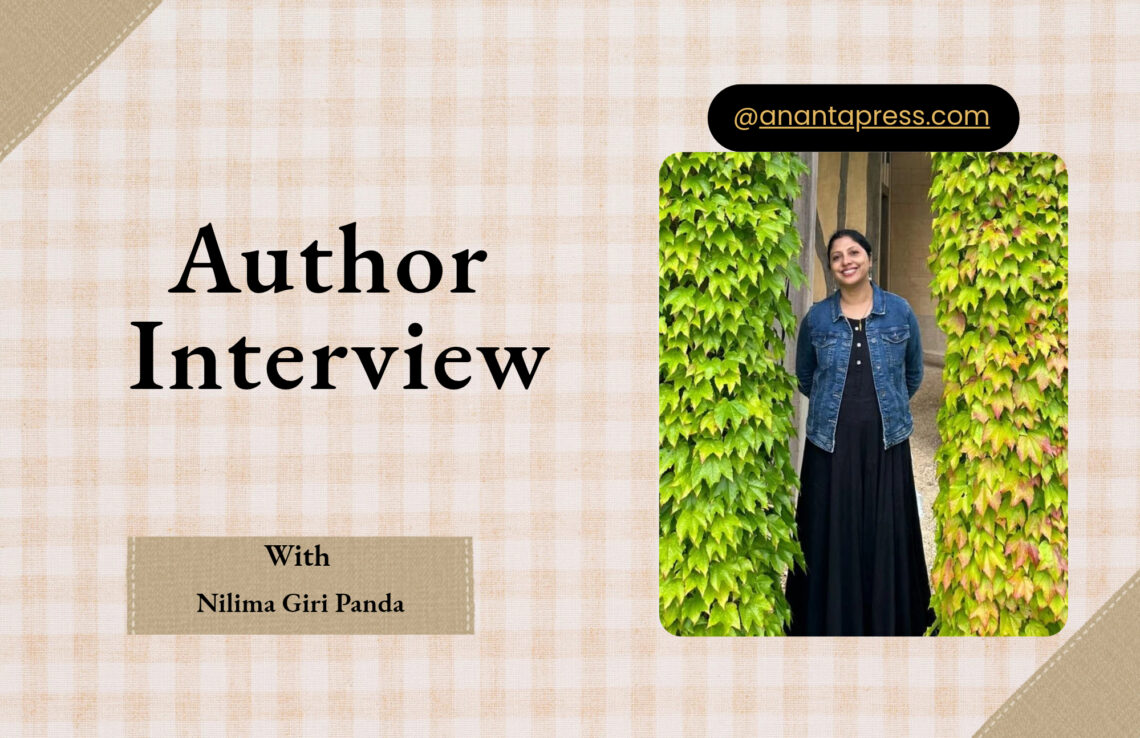
Deepti Singh – What inspired you to write YES – Love Will Find a Way, and how did the original idea for this story first come to you?
Nilima Giri Panda- “As I looked at the world around me, I realized that every single soul carries a story of silent courage. Despite loss, time, or life’s unexpected detours, love and hope are always quietly present, waiting for us to notice them. A sincere ‘YES’ is born from a positive feeling—it is a conscious choice to embrace optimism. When we step into that state of mind, optimism itself opens new doors and reveals new opportunities. Saying ‘YES’ possesses a gentle, transformative power—it opens doors that once felt irrevocably locked by doubt, fear, or heartache. Ultimately, saying ‘YES’ is a choice to keep our hearts tender, to honour the promises we make to those we love, and to trust that no matter how winding or difficult the road becomes, love will always find its way.”
“If I am being completely honest, I don’t recall the exact moment the idea for this book was conceived. Instead, I think it was seeded long before I ever picked up a pen. It grew out of watching someone like Jay—a person who was deeply loved, cherished, and grounded by the warmth of those around him. Without realizing it at the time, seeing that kind of genuine affection planted a quiet truth in my heart: that love, when given freely and deeply, creates its own path forward. This story grew from that gentle realization.”
Deepti Singh – You mentioned that you began writing this story in 2017 but completed it during a deeply emotional period in 2025. How did your personal journey, particularly the loss of your mother, influence the emotions and message of the novel?
Nilima Giri Panda- “I have always been a storyteller. As a child, I read countless books and retold the stories to my mother. She always listened with so much love. When I began writing my own story years later, I read her the opening pages. She smiled at me gently and said, ‘Complete it. It’s good.’
Life happened—raising my two boys through school, board exams, and sports, alongside caring for family health—and my writing was tucked away into quiet corners of time. When she passed away from cancer, a heavy sadness settled in me that I hadn’t completed the story she so lovingly encouraged. Returning to finish these pages became my way of holding on to her voice, fulfilling that soft wish, and honouring the woman who was my very first, and favourite, audience.
Her loss deeply shaped the emotional landscape of the novel. It infused the story with a raw, authentic understanding of grief, but also with an even stronger belief in love and memory. Finishing YES – Love Will Find a Way was not just about writing a book—it was about choosing hope over despair, honouring a mother’s belief, and proving that love truly endures across time and loss.”
Deepti Singh – The title YES – Love Will Find a Way carries a powerful sense of hope and acceptance. What does the word “YES” personally mean to you, and why did you choose it as the central theme of your book?
Nilima Giri Panda- “To me, ‘no’ is a closed room. It stops the story in its tracks. But ‘YES’ represents the moment you choose to remain open. In writing this book, I wanted to explore that tiny, courageous shift in perspective. Saying ‘YES’ is a gentle decision to trust that love and healing will find a path through any obstacle, no matter how long it takes.”
Deepti Singh – Your novel explores love beyond conventional romantic relationships. What inspired you to bring together romance, friendship, parenthood, family bonds, and unconditional compassion in one story?
Nilima Giri Panda- “I didn’t want to write a story about just one kind of love, because real life isn’t lived in isolation. YES – Love Will Find a Way is truly the story of each one of us. We have all loved, we have all been loved, and we all rely on friends as essential anchors through life’s storms. Every character in this book holds a piece of who we are—our struggles, our quiet sacrifices, our deep family ties, and our capacity for compassion. To capture the beauty of the human heart, you have to honour all the ways it learns to open up.”
Deepti Singh – Manav Mishra and Chitralekha Shukla share a relationship filled with humour, arguments, affection, and emotional complexity. How did you develop their personalities, and what makes their connection special?
Nilima Giri Panda- “Developing Manav and Chitralekha was all about capturing the complexity of real-life closeness. When your families are intrinsically linked, you share a history that doesn’t require pretence. I wanted their dynamic to feel vibrant—full of quick humour, childish arguments, and high-stakes emotional moments.
What makes them stand out is that despite every disagreement, there is zero doubt about their care for one another. That kindness at the heart of the protagonist shines through every interaction. The hidden bond rooted in their mothers’ friendship acts as a safety net, allowing them to test boundaries, clash, and ultimately grow closer.”
Deepti Singh – Chitralekha is portrayed as an independent, compassionate young woman who deeply cares for animals and the people around her. What qualities did you particularly want readers to admire or understand about her?
Nilima Giri Panda- “With Chitralekha, I wanted to create a protagonist who proves that being gentle and homely is a form of immense strength. She isn’t defined by grand, dramatic gestures, but by how honestly and courageously she carries life’s everyday weights.
When her mother passed away, Chitralekha quietly became the pillar of her home. She managed her college studies, stood shoulder-to-shoulder with her Babuji in running the house and managing his clinic, and still kept her heart open to animals and anyone needing a kind word. I want readers to admire her integrity—to see a young woman who leads an honest, compassionate life not because it’s easy, but because that is simply who she is at her core.”
Deepti Singh – Manav initially appears confident, playful, and sometimes sarcastic, but his character also reveals remarkable tenderness and responsibility. What did you want to communicate through these contrasting aspects of his personality?
Nilima Giri Panda- “In today’s fast-paced world, it’s easy for young people to hide behind humour or casual detachment. Manav starts off with that familiar playful, sarcastic charm, but as his journey unfolds, his true character shines through in his tenderness and sense of duty.
I wanted readers to see that focus and responsibility aren’t heavy burdens—they are what give a man dignity. Whether it’s dedication to a job or committing deeply to a relationship, Manav shows that taking responsibility is the ultimate form of maturity and care.”
Deepti Singh – One of the most touching moments in the novel occurs when Manav and Chitralekha discover an abandoned newborn outside the animal clinic. What inspired you to include this incident, and how does it change the direction of their lives?
Nilima Giri Panda- “I once read a thought that stayed with me forever: if every home in India could welcome and adopt a child, we would have no orphans and no orphanages left in our country. There is always room in a home—and in a heart—for a little extra love and compassion.
Including this incident was my way of bringing that belief to life. When Manav and Chitralekha discover the abandoned baby outside the clinic, their world completely shifts. A child brings added responsibilities, but it also builds character. In that single moment, their banter and youthful lightness give way to something bigger than themselves. Caring for that innocent life forces both of them to grow up, step into true maturity, and realize that love isn’t just a feeling—it’s an active commitment to protect and nurture.”
Deepti Singh – Jay becomes an important emotional connection between several characters. Through his journey, what did you hope to express about belonging, acceptance, and the meaning of family?
Nilima Giri Panda- “When readers meet Jay, they discover a perspective on life that is pure magic. Most people view being abandoned as a loss, but Jay considers himself extraordinarily lucky. In his eyes, he wasn’t left behind—he was given the whole universe to love him.
Through Jay, I wanted to show that family is not defined merely by genetics, but by genuine belonging and acceptance. The people in his life embraced him fully, surrounding him with care, warmth, and guidance. That collective love gave him a safe foundation to grow into a strong, confident, and secure young man. Jay’s journey reminds us that when we choose to open our hearts to a child, the universe returns that love tenfold.”
Deepti Singh – The novel uses different characters’ perspectives to reveal their private feelings and experiences. Why did you choose this storytelling approach, and how did it help you explore the emotional depth of the narrative?
Nilima Giri Panda- “In real life, no event happens in a vacuum. A single choice, a moment of grief, or a quiet act of kindness affects everyone in the room differently. I chose to tell this story through multiple perspectives because every character carries their own hidden world of emotions, fears, and silent sacrifices.
Jay, Chitralekha, Manav, Samir, and Agastya are all interwoven by love and responsibility. Each of them is driven by a deep desire to help one another, uplift their society, and show up for the people around them. By giving each character a voice, the story reveals that no burden is carried in isolation—and that when hearts choose to remain open, no one ever truly walks alone.”